
An Italian card game for the 48K ZX Spectrum

SCOPA

Scopa, the classic Italian card game — hand-written in pure Z80 machine code for an unmodified 48K Sinclair ZX Spectrum. The full Napoletane deck, a genuinely strong opponent that plays fair (it never sees your hand), and a match to eleven.

A recreation of a friend’s lost game —
based on an original ZX Spectrum game by Angelo Colucci.

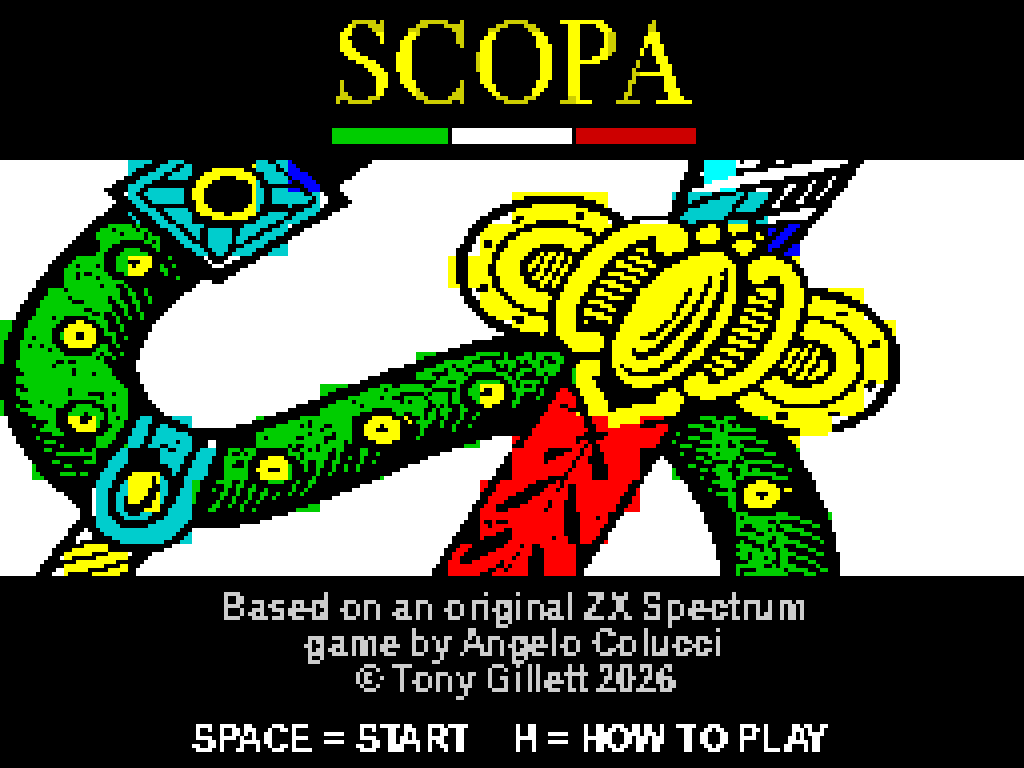
Scopa loading screen: a Neapolitan knight on horseback holding a gold coin, with the SCOPA wordmark over the Italian tricolore

The tape loading screen — drawn pixel by pixel on the Spectrum.

Play it now

Scopa — "broom" — is the classic Italian fishing game: play a card to capture table cards that add up to its value, and clear the whole table for a scopa. Most cards, most coins, the seven of coins (the settebello), the primiera and every scopa all score — first to eleven wins. And it runs right here in your browser, no download or plug-ins: give it a moment to boot, then press SPACE and play. Prefer real hardware? The tape's just below.

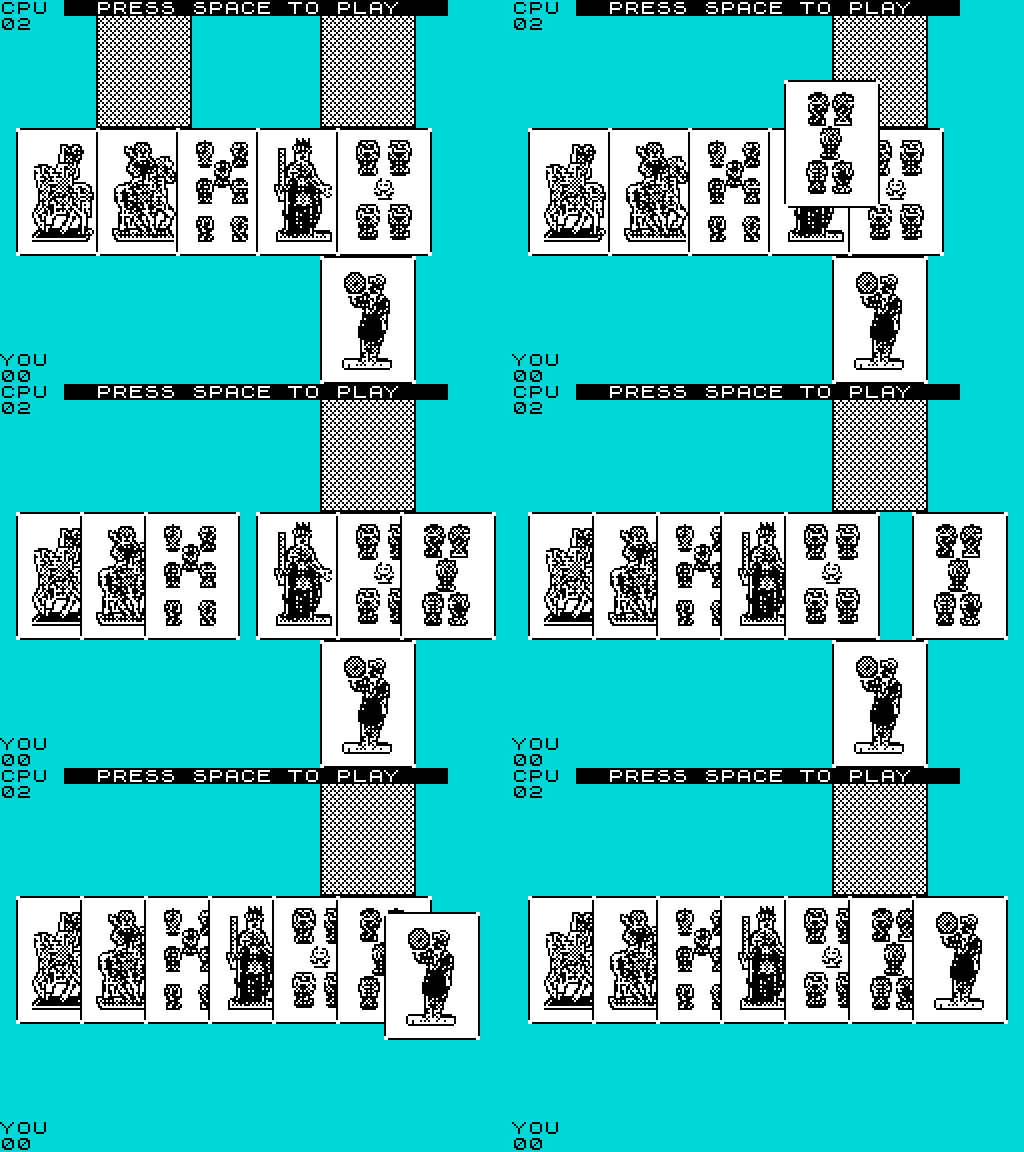
Animated gameplay: Neapolitan cards played and captured on the cyan felt
A hand in play — it even plays itself in attract mode
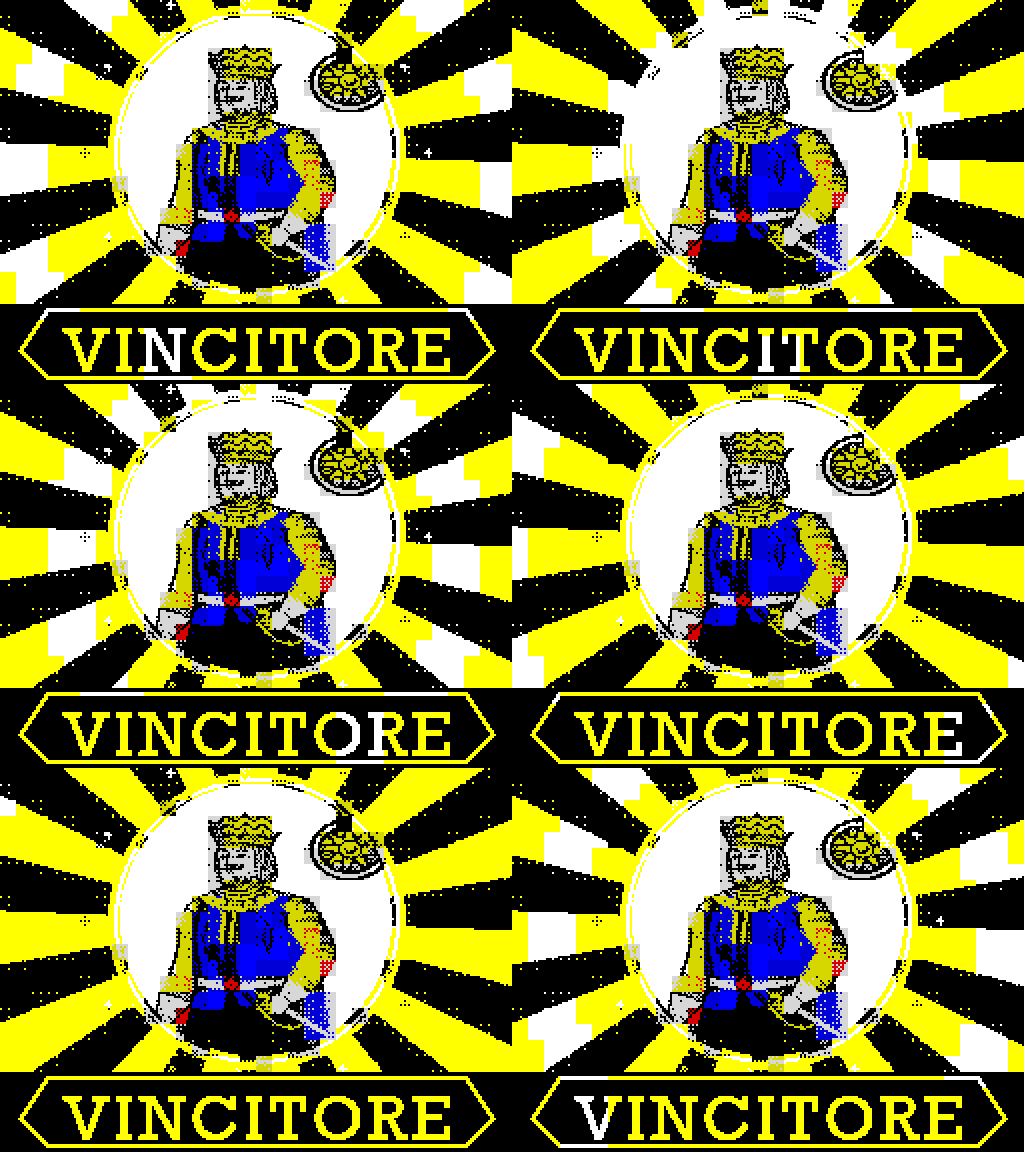
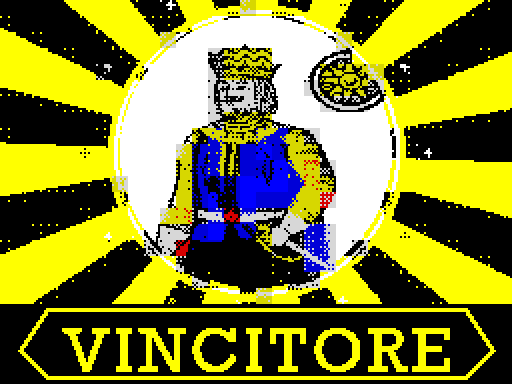
The VINCITORE victory screen with an animated golden sunburst shimmer
VINCITORE! — win the match and the golden rays shimmer

▶  Play in your browser ⤓  Download the tape

In play

Title screen: the Ace of Swords with the SCOPA wordmark and tricolore
Title screen
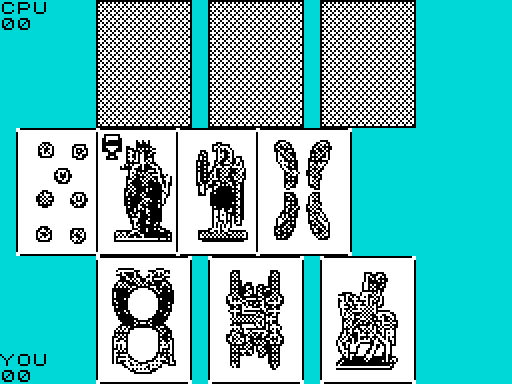
A hand in progress: the cyan felt, the opponent's face-down cards, the table, and your hand
A hand in progress
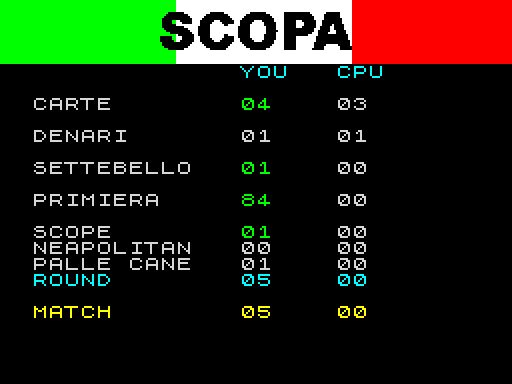
End-of-deal scoring screen showing Carte, Denari, Settebello, Primiera and more
Round scoring
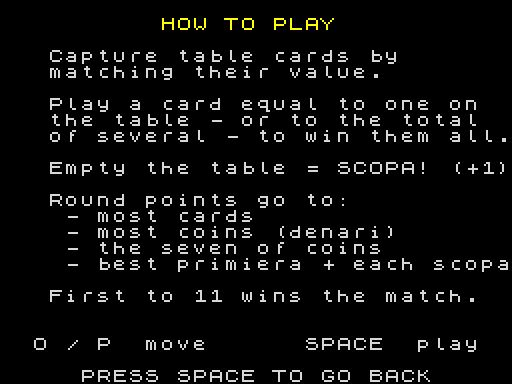
The in-game how-to-play screen
How to play
The VINCITORE victory screen: the King of Coins on a golden sunburst when you win the match
Vincitore!

A faithful Neapolitan deck

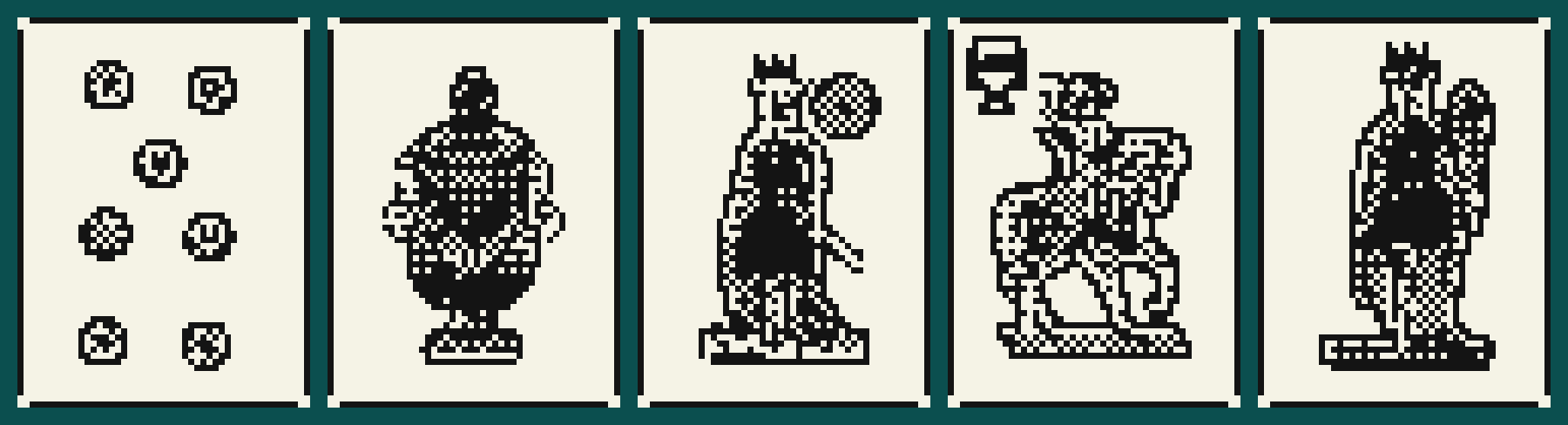
Every one of the forty cards is rendered in defined monochrome — crisp black linework with ordered-dither shading — traced faithfully from a real Napoletane deck. The four suits (coins, cups, swords, clubs), the settebello, and the court figures with their hand-placed suit emblems, all on a single 48 KB machine.

Five cards close up: the seven of coins, ace of cups, king of coins, knight of cups and king of clubs
The complete forty-card Neapolitan deck rendered for the ZX Spectrum
The complete forty-card deck.

What’s inside

Pure Z80

100% hand-written machine code on an unmodified 48K Spectrum — no extra hardware, no 128K.

A strong opponent

Four levels — Easy, Medium, Hard and Esperto. Each weighs every legal play with a tuned value function; Esperto counts cards and, once the deck runs out, searches the endgame exactly. It plays fair: it never sees your hand.

🪙

Full scoring

Carte, Denari, the Settebello, Primiera, every Scopa, plus the regional Napola and palle del cane bonuses. First to eleven wins.

🎴

Authentic art

Every rank and suit stays legible at the Spectrum’s 48×64 pixels — down to the little crowns that tell a Re (king) from a Fante (knave).

🃏

Optional rule

Asso piglia tutto — the ace sweeps the whole table — included as a toggle, off by default, in the Scopa d’Assi reading.

📼

Loads from tape

A silent multi-part loader boots straight to the title screen on real hardware — TZX and TAP both provided.

It plays itself

Leave it idle on the title and an attract mode takes over — the AI plays itself at Esperto, hand after hand. Press Space to step in.

Download & play on real hardware

Grab a tape image for your real Spectrum or your favourite emulator (Fuse, ZEsarUX, Spectaculator…). Both load identically; the TZX also carries title, author and year metadata.

On a real 48K Spectrum: LOAD "" and play the tape. It boots itself to the title screen.

The story

Years ago a friend, Angelo Colucci, wrote a game of Scopa for the ZX Spectrum. Its hand-drawn cards were superb — and, like so much home-grown 8-bit software, it slipped away with the tapes and the years.

This is a recreation, built to honour it — and to put it back in Angelo’s hands: the Italian card game in full, written from scratch in Z80 machine code for a real 48K machine. The rules and scoring were checked against the standard Neapolitan game, the card art traced faithfully from a physical deck, and the AI tuned over tens of thousands of self-played games. The whole thing was developed and tested on real hardware, on a CRT.

Read how it was built →  ·  Source on GitHub

— Tony Gillett, 2026